Tracker
Tracker: OpenAI's first hardware is a control deck for agents
Two OpenAI hardware stories landed in the same week, and most of the coverage blurred them into one. On July 14, Bloomberg reported that OpenAI's first device would be a screenless, self-moving speaker — an AI companion for the home, due in 2027. On July 15, OpenAI actually shipped its first hardware product, and it is neither screenless, nor a companion, nor 2027. It is a thirteen-key macro pad for telling coding agents what to do, and you can buy it today for 230 dollars.
The tracker exists to keep those two kinds of story apart. One is a receipt; the other is a report about a thing that may ship in eighteen months in some other form. Both are below, labeled.
TL;DR
- OpenAI launched the Codex Micro (full name kbd-1.0-codex-micro) on July 15 — its first hardware product, built with the keyboard maker Work Louder, priced at 230 dollars, sold as a limited run.
- It is a desk controller for Codex: thirteen mechanical keys, a rotary dial, a joystick, a touch sensor. Six Agent Keys carry live RGB status for running agents — white idle, blue thinking, green done, amber waiting on you, red error — and a tap jumps to that agent's chat.
- The catch: the agent-status features need the ChatGPT desktop app. This is a peripheral for OpenAI's stack, not a neutral one.
- Separately and unshipped: Bloomberg reports the Jony Ive device line is a movable, screenless AI companion targeting a 2027 launch. Reported, not released.
- Our read: the first hardware product from the company that sells thinking is a box of physical buttons for supervising thinking. The agent-operator's desk is becoming a product category.
OpenAI hardware
the July 2026 card
Resources
The receipts, from the source outward:
What actually shipped
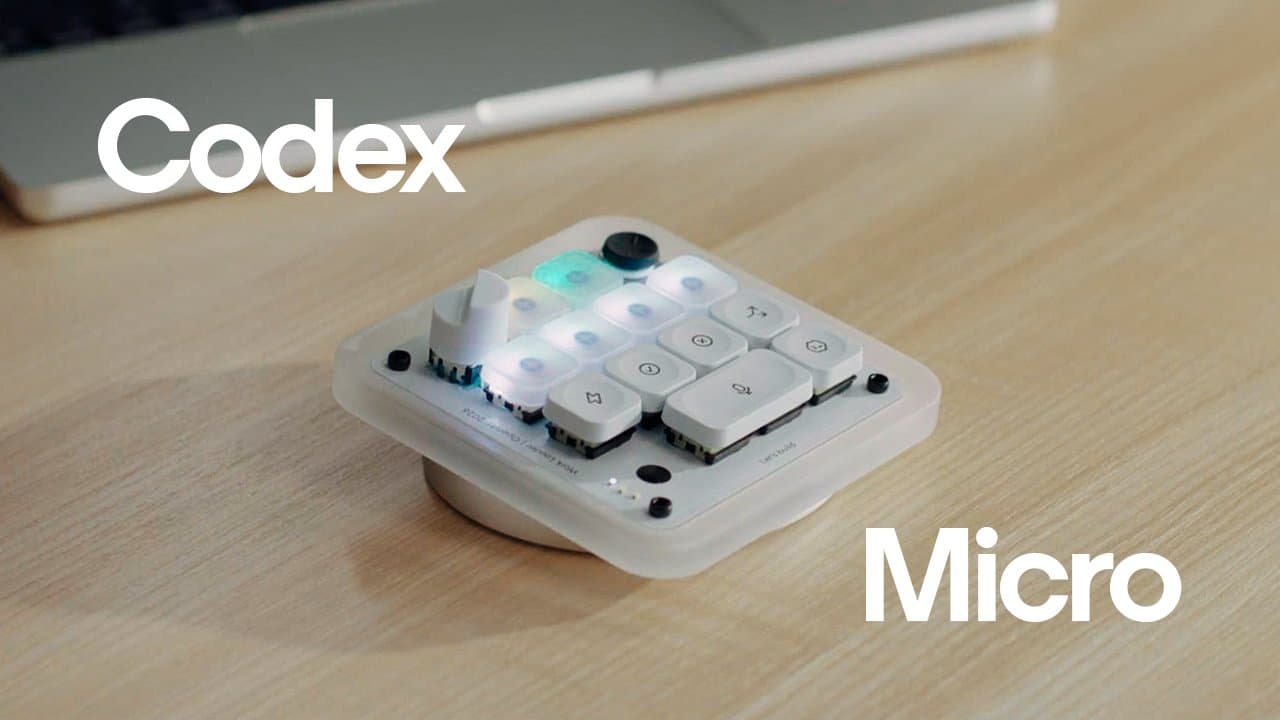
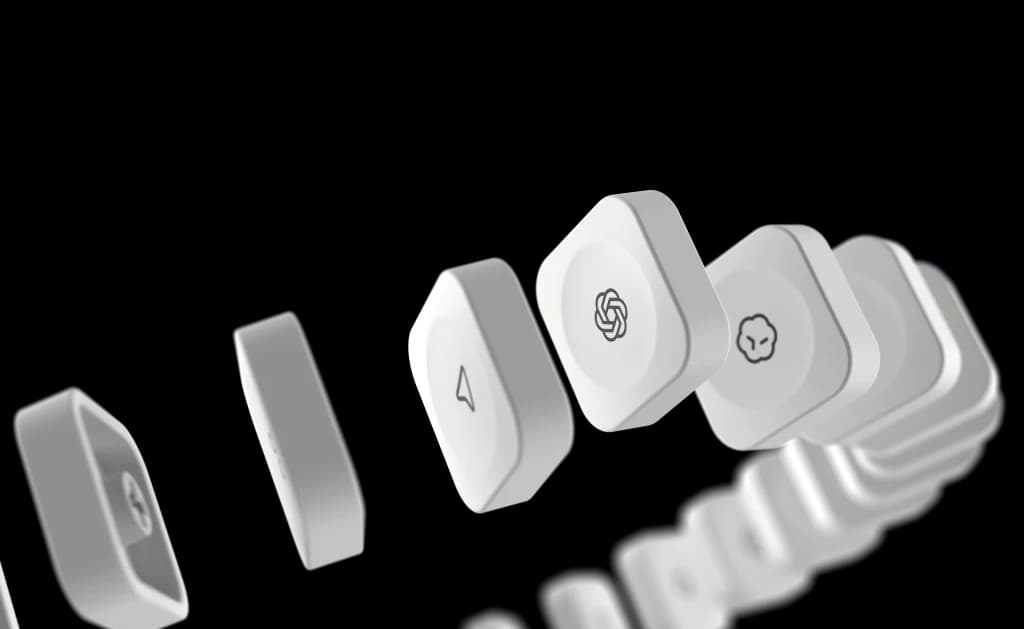
The Codex Micro is a collaboration with Work Louder, built on the same compact chassis the company has previously dressed up for Figma and Framer. Thirteen low-profile mechanical switches, a rotary dial, a joystick, a touch strip, Bluetooth and USB-C, Mac and Windows. It comes in two switch flavors, clicky and silent — Sam Altman's launch commentary on X was that he finds it incredible anyone wants the silent one — and ships with a set of thirty-two extra keycaps. Two hundred thirty dollars, limited run, sold through OpenAI's Supply Co. store. The launch post from OpenAI Developers reads, in full: meet kbd-1.0-codex-micro, built with Work Louder — map the buttons and joystick to your workflow, and keep your pinned chats in view. Get yours before stock returns 410.
The feature that matters is the top row. Six Agent Keys are bound to running Codex agents, and each key's backlight is a live status feed — white for idle, blue for thinking, green for done, amber when the agent is waiting on a human, red on error. One tap on a key drops you into that agent's chat. The rest of the pad is mappable to whatever Codex actions you lean on.
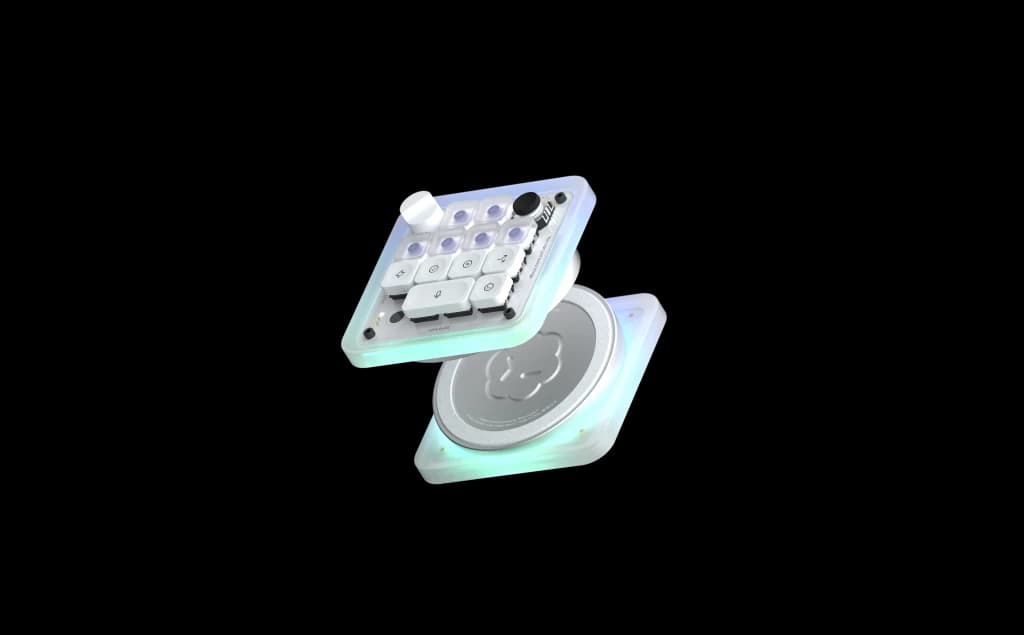
Worth knowing before you order one: the agent-status integration runs through the ChatGPT desktop app, so the clever parts of this device only light up inside OpenAI's own stack. And the spec sheets floating around the coverage disagree with each other on more details than you would expect for a product this small — a genuinely funny property for a launch about observable status. Where this post states a fact, it comes from the official page and launch post; treat deeper specs with mild suspicion until the units are on desks.
A keyboard for supervising thinking
Strip the novelty and look at what OpenAI decided to productize first. Not glasses, not a pin, not the companion from the leaks. A control surface. Six lights that answer one question — which of my agents needs me — and physical controls for the operations you perform on agents: switch to it, respond to it, adjust it, set another one running.
The first hardware product from the company that sells thinking is a box of buttons for supervising thinking. The desk got furnished before the living room.
That is a statement about where the daily work actually is in 2026. The person this device is for already runs several agents at once and already spends their attention not on writing code but on gates — noticing the amber light, reading what the agent wants, saying proceed or not-yet. We wrote about that division of labor in the factory post: the human contribution concentrates at approval gates, and everything between the gates runs on its own. OpenAI just shipped dedicated hardware for standing at the gates. Amber is the only light on that pad that matters; amber means a gate is open and taste is required.
For the shelf, the read is straightforward. Hardware like this normalizes multi-agent operation as an ordinary desk posture, and every agent under one of those keys is only as good as the instructions it runs. The key is a trigger. What makes the press worth pressing is the method wired behind it — which is exactly the artifact this directory exists to distribute. Control surfaces multiply agent runs; agent runs consume skills.
The one that did not ship
For completeness, the other story, clearly labeled as a report: Bloomberg's July 14 piece describes OpenAI's io hardware line — the Jony Ive operation acquired for 6.4 billion dollars in May 2025 — working toward a screenless speaker with mechanical elements that move on their own, meant to live in the home as a humanlike companion, control appliances, play media, and front ChatGPT. Announcement reportedly by the end of this year, launch in 2027. None of it is purchasable, none of it is confirmed by OpenAI, and the Codex Micro is explicitly a separate effort from the io line. If and when the companion ships, it gets its own tracker entry with its own receipts.
Why this is on the tracker
The Neon entry earned its place because our factory kit runs on Neon. OpenAI earns its place for a different reason: it is the largest force shaping how agents are operated, and the shelf lives downstream of agent operation. When the operator's job gets physical buttons, the job is being taken seriously as a job — and the pattern the buttons encode (many agents, live status, human at the gates) is the same pattern every skill on this shelf is written for. We track the platforms that decide what the desk looks like. This week, one of them decided the desk includes a box of lights that tells you when your agents need you. Shipped, receipt attached.